Here are some notes about my process developing 16mm black and white Hi-Con film, using redwood bark tea developer, for my project Understory. As I was learning about eco-processing, I benefitted from the generous way that other filmmakers shared their recipes and notes about their process, so I want to share mine as well, to help others who may want to try eco-processing film.
I shot Kodak 3378 “Hi Con” 16mm film (purchased from Mono No Aware). This is high contrast black and white film intended for creating an optical soundtrack. It makes great high contrast images, and worked very well with reversal eco-processing.
Because I don’t have access to a darkroom, I used a Lomo film developing tank to process my film. I loaded the Lomo tank in a film changing tent, and then once it was loaded, I could do all of the chemical processing in the light, pouring the developer and bleach into the light-tight tank, working over a kitchen sink. These tanks were made in the USSR in the 1960s. You can buy them on Ebay. It took me a while to learn how to load the Lomo tank correctly. I watched this youtube video to learn, and then practiced several times until I could load it while it was in my film changing tent. Once I got the hang of it, I really liked how the Lomo tank worked. It’s a great tool. You do have to split your 100 ft roll of film in half to load into the Lomo, so I did that during the loading process in the film changing tent. It took about five hours total to load the film into the Lomo, make the eco-developer and bleach and process the film, plus an hour before and after for set up and clean up. So it’s about a six or seven hour time commitment to eco-process a 100 foot roll of film.
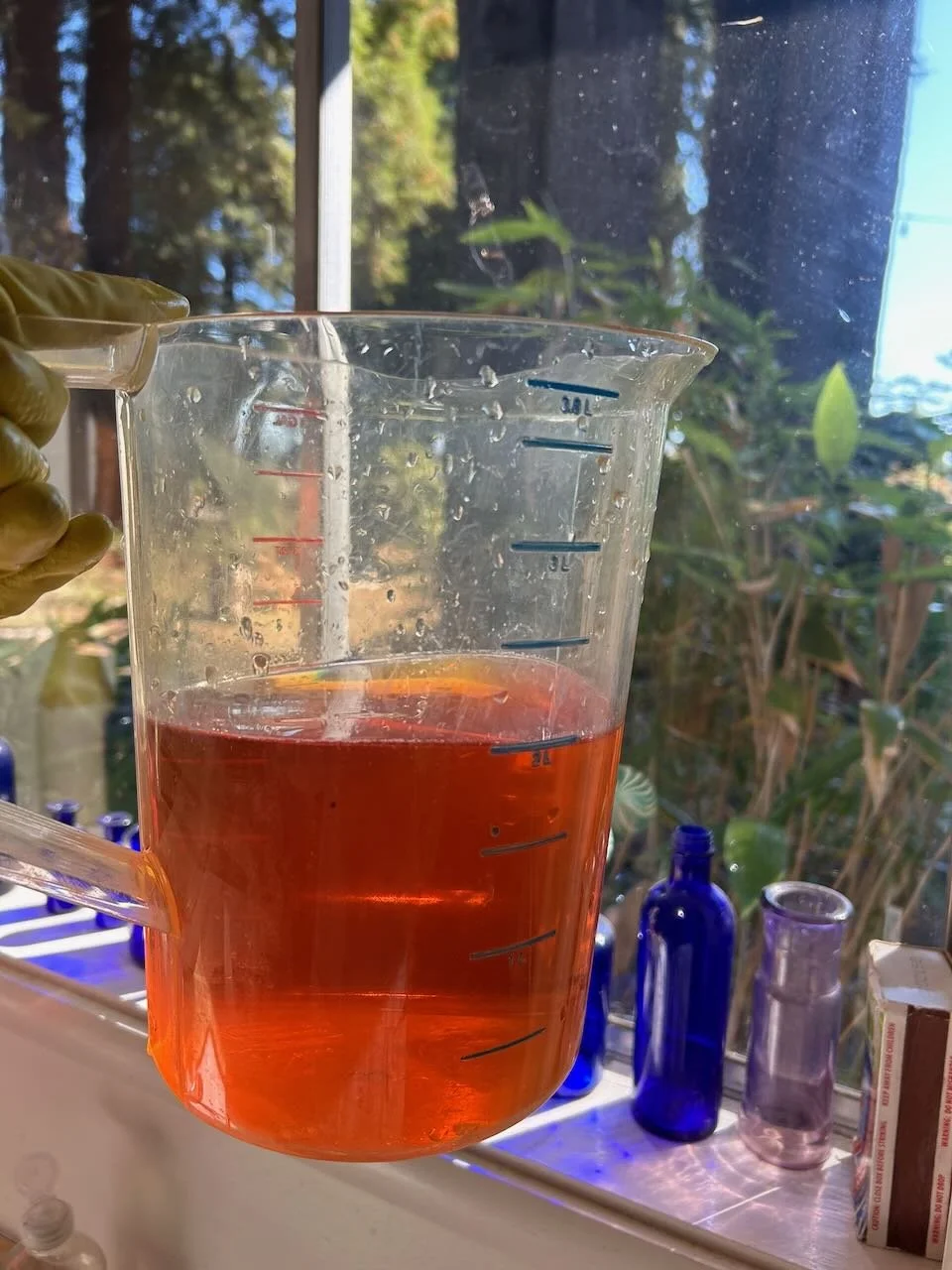
redwood tea eco-developer
Eco-Developer – 2 liters
Adapted from Echo Park Film Center Collective’s “Echo Eco Can Do” Bare Bones Caffenol Processing for B&W Reversal (Using High Contrast Recipe and Eco-Bleach)
I decided to use redwood bark as my developer, because the bark is rich in tannins. Echo Park Film Center had taught a workshop at the Larry Spring Museum on eco-processing, using this recipe, so I knew it worked well. Lisa Marr of Echo Park Film Center Collective gave me a lot of additional guidance along the way! A redwood tree had fallen onto our land in a storm a couple of years back, so I gathered bark from that tree.
Fill a large pot halfway with redwood bark, crumbled as much as you can. Fill rest of way with water (add a bit more than 2 liters). Bring to boil. Simmer 45 minutes. (Ideal to make the night before, so that you can let the redwood bark steep as long as possible.) Strain out redwood bark, using cheesecloth. Add 2 heaping teaspoons instant coffee to the two liter batch. Cool to approximately 30 degrees C (same temperature as hand). Add 120 grams washing soda (Arm and Hammer “Laundry Booster”) and 50 grams Vitamin C crystals. Use at 30 degrees (about skin temperature). You can keep it warm by putting the bottle in a warm bath inside a cooler. (I used empty water jugs to store my developer and eco-bleach).
Eco-Bleach – 2 liters (based on eco-reversal recipe by Dawn George, by way of Elian Mikkola)
520 ml hot water
1320 ml 12% Hydrogen Peroxide
80 ml clear vinegar
80 ml filtered lemon juice
(add in order of the list)
Bring to 38 degrees in a warm bath inside a cooler. (Around 100 degrees F)
Be careful and treat the eco-bleach with the same caution you would treat traditional chemistry - the solution is strong and can irritate skin and eyes. Also make sure you have good ventilation and do not breath in the fumes from this solution. Wear gloves and protect your skin. Always seal the solution well after use and dispose of it within two weeks in the nearest recycling centre with labels.
1. Water Rinse at 30 degrees C – 1 min
2. Develop at 30 degrees C – 12 min (turn 10 sec every one minute)
3. Water rinse at 28-30 degrees C – 5 min
4. Bleach at 38 degrees C – 6 min (turn slowly throughout)
5. Water Rinse at 28-30 degrees C – 5 min
6. Re-Exposure bright sunlight – 2:30 min
7. Second Develop at 28-30 degrees C – 6 min (turn 10 sec every one minute—maybe turned more)
8. Water rinse at 28-30 degrees C – 10 min (turn occasionally)
9. Fix 10 min in room temp sea water (turn occasionally)
10. Final Rinse 10 min 25-30 degrees C (turn occasionally)
After the rinse, I hung the film to dry in a shed that was warm and protected, but had ventiilation (It’s the ceramics showroom for Colleen Hennessey Clayworks.) I used paperclips hanging on a wire, hooking sprocket holes onto the paperclips to make big loops that hung down from the wire, so that the film would not touch itself (and stick).

hanging the film to dry
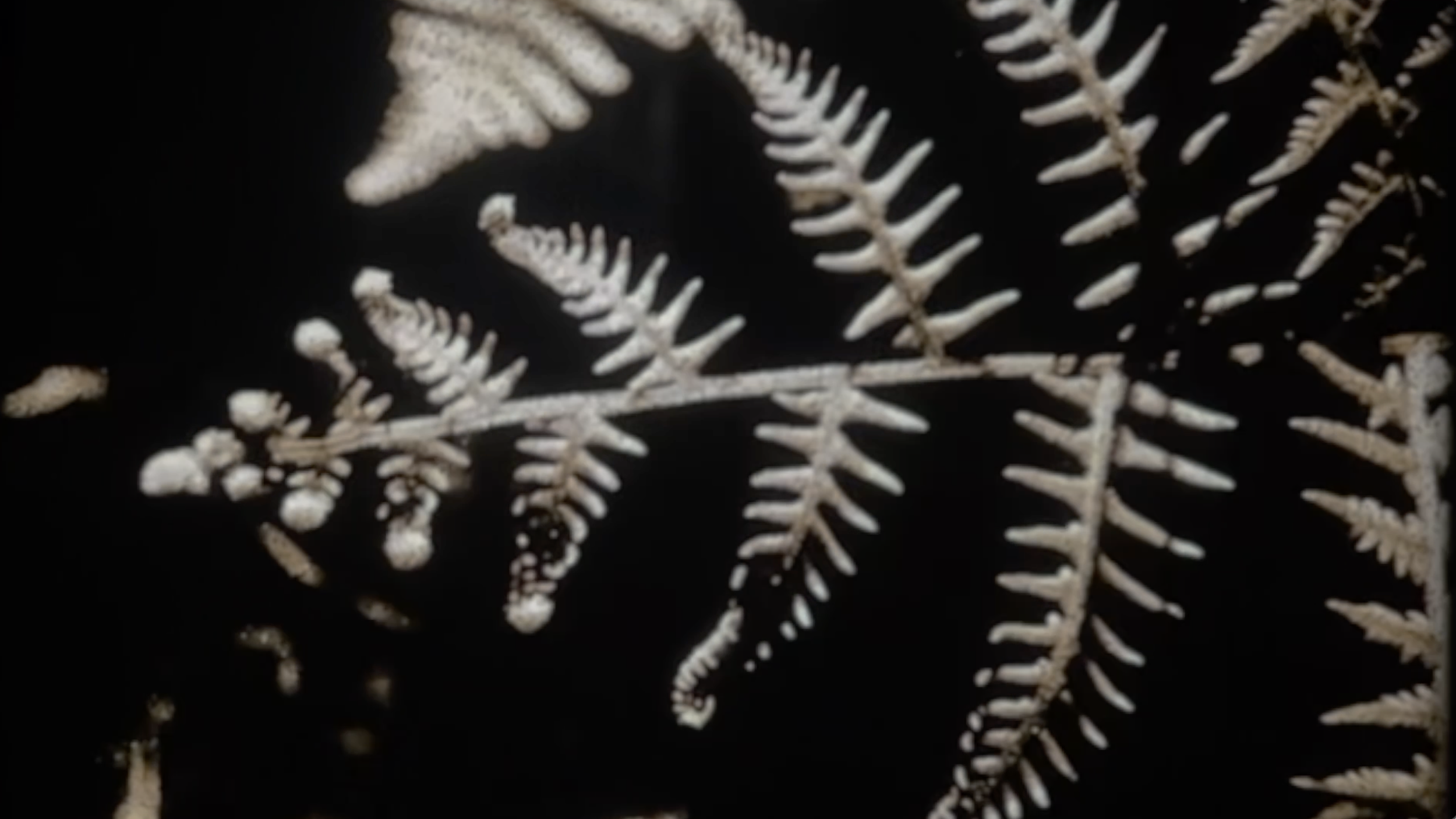
bracken fern, film still from “Understory”

bracken fern, film still from “Understory”
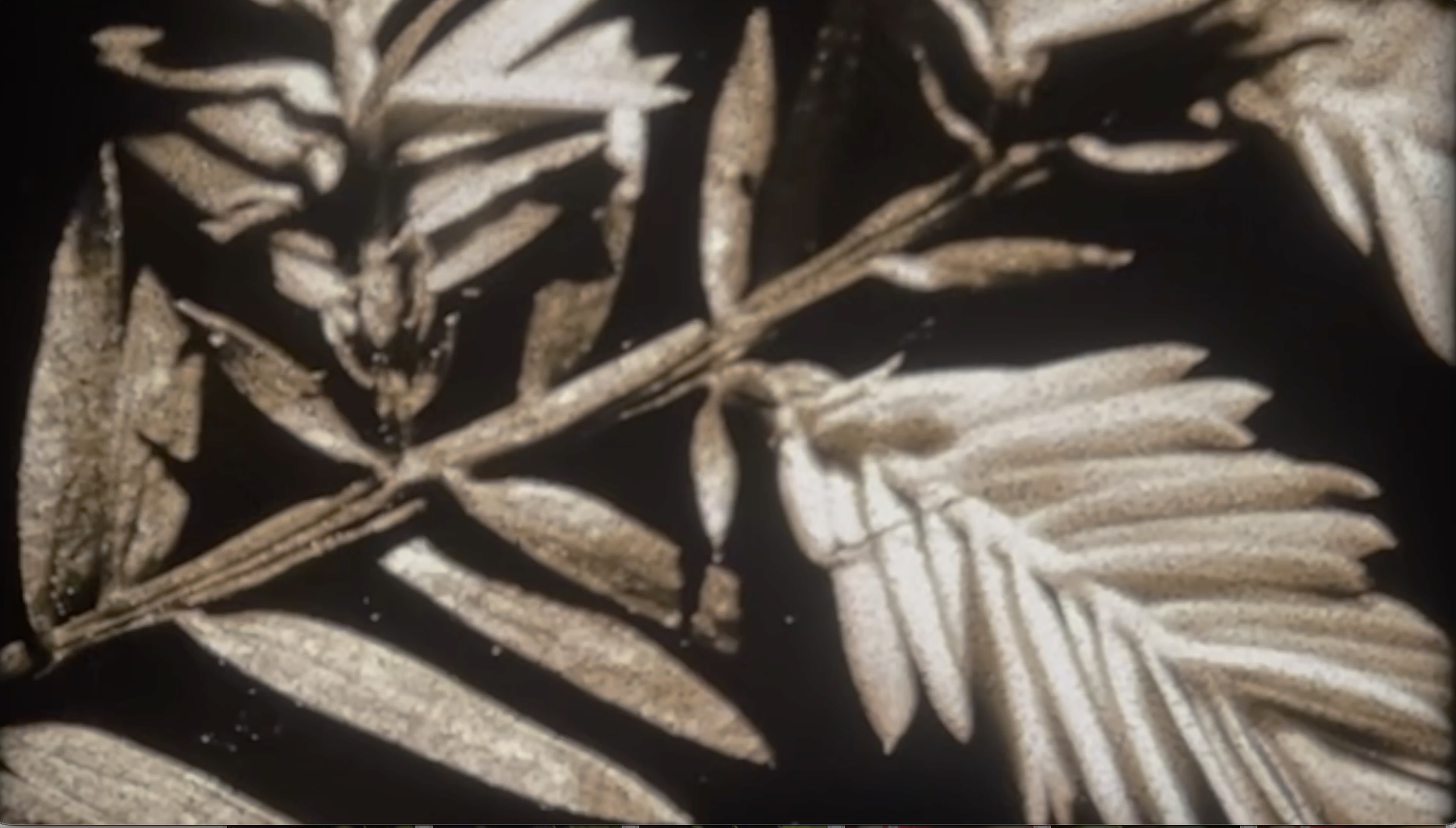
redwood leaves, film still from “Understory”
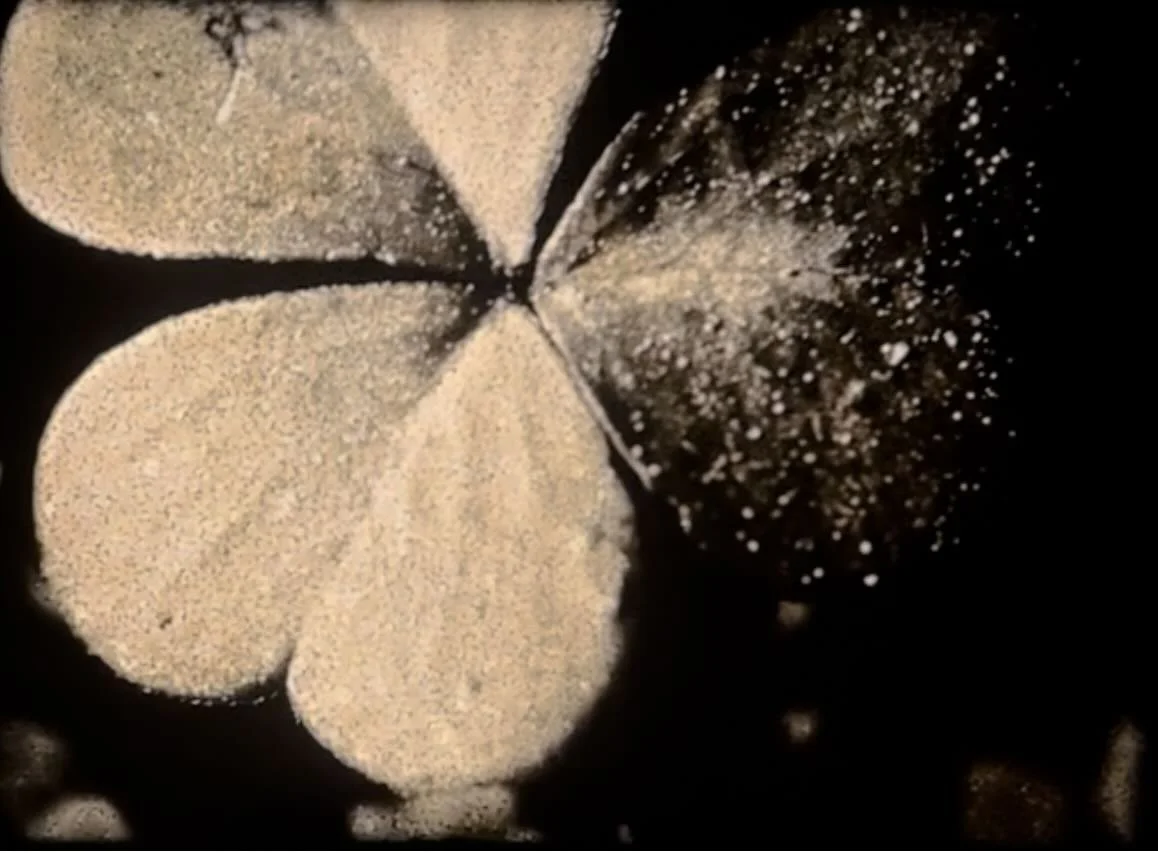
redwood sorrel, film still from “Understory”